

Selecting the right T20 grid coupling supplier significantly impacts equipment reliability, maintenance costs, and operational continuity in industrial facilities. The T20 grid coupling — a widely specified industrial flexible coupling used in medium-duty to heavy-duty power transmission applications — is available from numerous global and regional suppliers, but the quality of the product, supporting documentation, and technical service varies considerably between sources.
This procurement guide outlines what engineering and purchasing teams should expect from a qualified T20 grid coupling supplier, including quality assurance capabilities, technical support depth, inventory management, and delivery performance. The criteria presented here help procurement professionals distinguish between suppliers who deliver genuine value and those who merely compete on price.
Quality Assurance: The Foundation of Supplier Credibility
A professional T20 grid coupling supplier maintains documented quality management systems that trace raw material sourcing through finished product testing and shipment. ISO 9001 certification represents the baseline quality standard — any reputable supplier should hold current ISO 9001 registration with a recognized certification body. Beyond certification, the quality management system should demonstrate specific controls relevant to coupling manufacturing.
Material traceability is particularly important for grid couplings used in critical service applications. The supplier should provide mill test certificates (MTCs) verifying material chemistry and mechanical properties for both hub and grid spring components. Positive material identification (PMI) verification at incoming inspection stages confirms that actual materials match documentation — a critical safeguard against material mix-ups that could lead to in-service failures.
Dimensional inspection capabilities ensure that coupling bores, keyways, and mounting features meet specified tolerances. A qualified T20 grid coupling supplier uses calibrated coordinate measuring machines (CMMs) and specialized go/no-go gauges to verify critical dimensions on finished products. Requests for dimensional inspection reports should be fulfilled promptly with complete, legible documentation.
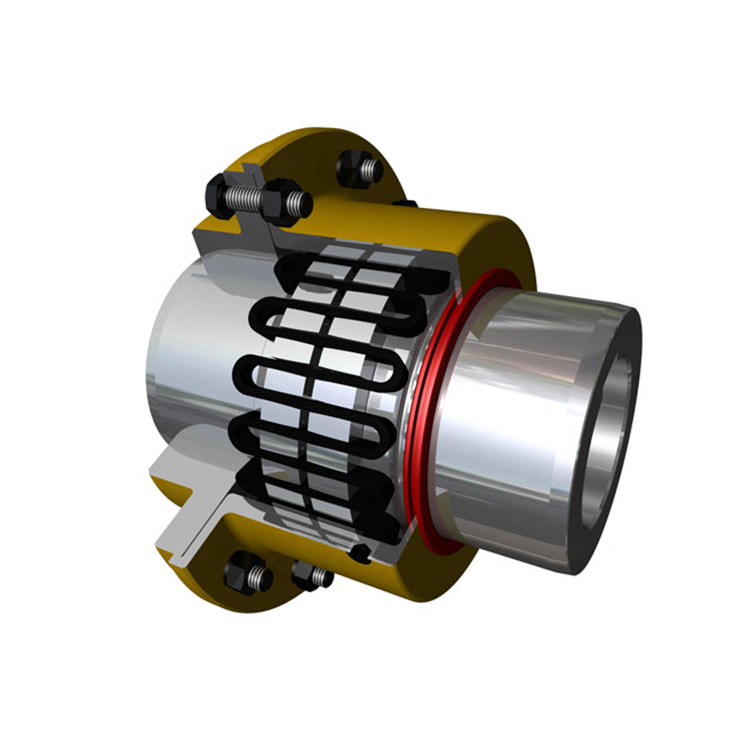
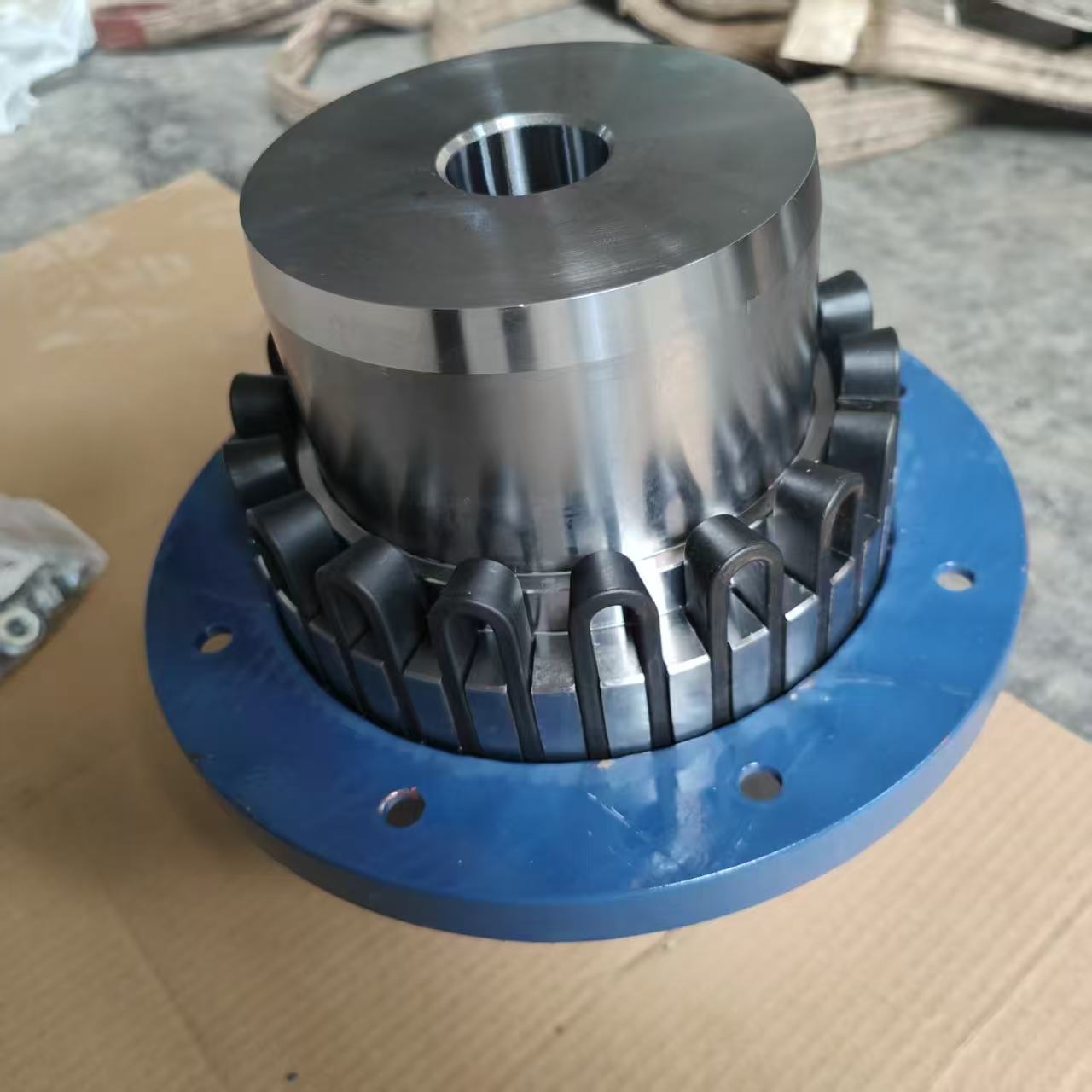
Technical Expertise and Application Engineering Support
The technical knowledge gap between coupling suppliers can be substantial. A professional T20 grid coupling supplier provides engineering support that extends beyond basic catalog lookups. This includes application analysis services that evaluate operating conditions — torque, speed, misalignment, temperature, and environment — to recommend the optimal coupling model, size, and material configuration for each specific installation.
Technical documentation quality serves as a reliable indicator of engineering depth. Professional suppliers provide comprehensive installation manuals with torque specifications, alignment procedures, lubrication recommendations, and detailed dimensional drawings. Troubleshooting guides that address common field issues — vibration, heat, wear, and noise — demonstrate practical experience with real-world coupling applications.
Engineers should evaluate the supplier's ability to customize coupling specifications when standard catalog offerings do not precisely match application requirements. Bore modifications, keyway configurations, special material grades, and adapted cover designs are common customization requests. A responsive supplier with in-house manufacturing capability typically provides faster and more cost-effective customization than brokers or distributors who simply relay requests to remote factories.
Inventory Depth and Product Availability
Product availability directly affects maintenance scheduling flexibility and unplanned downtime duration. A well-stocked T20 grid coupling supplier maintains comprehensive inventory covering the full range of T20 coupling sizes, bore configurations, and optional accessories. This inventory depth enables rapid shipment of replacement components — often within 24-48 hours for standard configurations.
For facilities with critical equipment requiring coupling redundancy, a professional supplier offers consignment inventory arrangements or blanket purchase agreements that position specified coupling models on-site or in regional warehouses. These arrangements eliminate lead time for emergency replacements while reducing inventory carrying costs for the end user.
Spare parts availability extends beyond complete coupling assemblies to include individual grid springs, seals, cover hardware, and lubrication accessories. The ability to source replacement grids without purchasing complete coupling units provides significant cost savings for maintenance programs that replace grids on scheduled intervals as a preventive maintenance measure.
Compliance Documentation and Certifications
Industrial facilities increasingly require coupling suppliers to provide compliance documentation meeting regulatory and industry standards. A professional T20 grid coupling supplier proactively maintains and provides documentation packages that include material certificates, dimensional reports, balance certificates, and — where applicable — third-party inspection reports from agencies such as TÜV, Lloyd's Register, or ABS.
For applications in regulated industries — including food processing, pharmaceutical manufacturing, oil and gas, and power generation — the supplier should understand and accommodate sector-specific requirements. This includes providing couplings with appropriate material certifications (such as 316L stainless steel with MTCs for food-grade service) and supporting documentation formats required by plant quality management systems.
Export documentation capability matters for multinational operations. Suppliers experienced in international trade provide commercial invoices, packing lists, certificates of origin, and material declarations that satisfy customs requirements across different jurisdictions. This experience streamlines procurement for global supply chains and avoids costly delays at border crossings.
Pricing Transparency and Total Cost Considerations
Price is a necessary consideration in supplier evaluation, but it should be evaluated within the context of total cost of ownership. A professional T20 grid coupling supplier provides transparent pricing with clear breakdowns of component costs, customization charges, and any applicable surcharges for expedited delivery or special material grades. Hidden fees and unclear pricing structures indicate supplier quality concerns that extend beyond commercial terms.
Total cost analysis should incorporate coupling service life, replacement frequency, and associated downtime costs. A lower-priced coupling that fails prematurely and requires replacement twice as frequently typically costs significantly more than a higher-quality alternative when downtime losses are included. Professional suppliers support TCO analysis by providing realistic service life estimates based on actual application data and offering extended warranty programs that align manufacturer confidence with customer expectations.
Volume pricing programs reward customer loyalty while providing predictable cost structures for long-term supply agreements. A reputable T20 grid coupling supplier negotiates pricing based on annual volume commitments, product mix complexity, and payment terms that reflect the strategic value of the customer relationship.
After-Sales Service and Long-Term Partnership Value
The supplier relationship extends well beyond the initial purchase transaction. A professional T20 grid coupling supplier provides ongoing support including failure analysis investigation when coupling problems occur, field installation assistance for critical applications, and periodic technical reviews that assess whether current coupling specifications remain appropriate as operating conditions evolve.
Training programs for maintenance technicians demonstrate supplier commitment to customer success. Hands-on training covering proper coupling installation, alignment, lubrication, and inspection procedures equips customer teams with the knowledge to maximize coupling service life. Suppliers who invest in customer training typically experience fewer warranty claims and build stronger long-term relationships.
Warranty terms and claim handling processes reveal much about supplier confidence in product quality. Professional suppliers offer warranty terms of 12 to 24 months — or longer for critical service applications — with straightforward claim processes that prioritize rapid resolution over dispute avoidance. Excessively short warranty periods or complex claim procedures suggest the supplier lacks confidence in their product's field performance.
Frequently Asked Questions
How do I verify a T20 grid coupling supplier's quality credentials?
Request current ISO 9001 certification documentation, sample material test certificates for typical products, and — where available — third-party inspection reports. Visit the supplier's manufacturing facility if possible to observe quality control processes firsthand. Request references from existing customers in similar industrial applications and contact them directly to verify product quality and service performance.
What documentation should I receive with each T20 grid coupling order?
Standard documentation should include material test certificates for hub and grid materials, dimensional inspection reports for bore and mounting features, installation and lubrication instructions, and a certificate of conformance confirming that the product meets all ordered specifications. For critical applications, request balance certificates, third-party inspection reports, and any applicable industry certifications relevant to your service conditions.
How quickly should a professional T20 grid coupling supplier deliver standard products?
Delivery times depend on product availability and your location relative to the supplier's warehouse network. For standard T20 coupling configurations held in stock, professional suppliers typically ship within 1-3 business days. Custom bore sizes, special materials, or non-standard configurations may require 4-8 weeks depending on manufacturing schedules. Emergency requirements should be discussed directly with the supplier, as expedited options are often available for critical situations.
Should I source from a manufacturer or a distributor?
Both can serve as professional suppliers when properly qualified. Manufacturers offer deep technical expertise and customization capability but may have longer lead times for non-stock items. Established distributors provide faster delivery from local inventory and may offer multiple product lines, but may have limited customization capability. Evaluate your priorities — if customization and technical depth matter most, a manufacturer-direct relationship often delivers better value.
What distinguishes a professional supplier from a low-cost alternative?
Professional suppliers invest in quality assurance systems, maintain technical engineering staff, hold adequate inventory, provide comprehensive documentation, and support their products with responsive after-sales service. Low-cost alternatives typically lack one or more of these capabilities, resulting in inconsistent product quality, delayed deliveries, and limited support when problems occur. The cost savings from choosing a low-cost supplier are frequently offset by higher failure rates, longer downtime, and increased procurement administration.
Conclusion
Evaluating a T20 grid coupling supplier requires looking beyond unit price to assess the full spectrum of capabilities that determine long-term procurement value. Quality assurance systems, technical engineering support, inventory depth, compliance documentation, pricing transparency, and after-sales service collectively define supplier professionalism. Procurement teams that systematically evaluate suppliers against these criteria consistently achieve better equipment reliability outcomes and lower total ownership costs compared to those who select suppliers based primarily on lowest price. The time invested in thorough supplier qualification pays dividends across every subsequent coupling purchase and maintenance decision.
References
ISO 9001:2015 — Quality Management Systems: Requirements
AGMA 9002-B04 — Flexible Couplings: Design Considerations and Selection
API 620 — Design and Construction of Large Welded Low-Pressure Storage Tanks
ISO 14691:2008 — Flexible Couplings: Design, Selection and Application
Mancuso, J.R. (1999). Couplings and Joints: Design, Selection, and Application, 2nd Edition. Marcel Dekker.