

In modern industrial systems, efficient and reliable power transmission is essential for maintaining productivity and reducing downtime. Among the various coupling types available, flexible grid couplings have become a popular choice due to their durability, flexibility, and ability to handle demanding operating conditions.
This article explores what flexible grid couplings are, how they work, and why they are widely used across industries.
What Is a Flexible Grid Coupling?
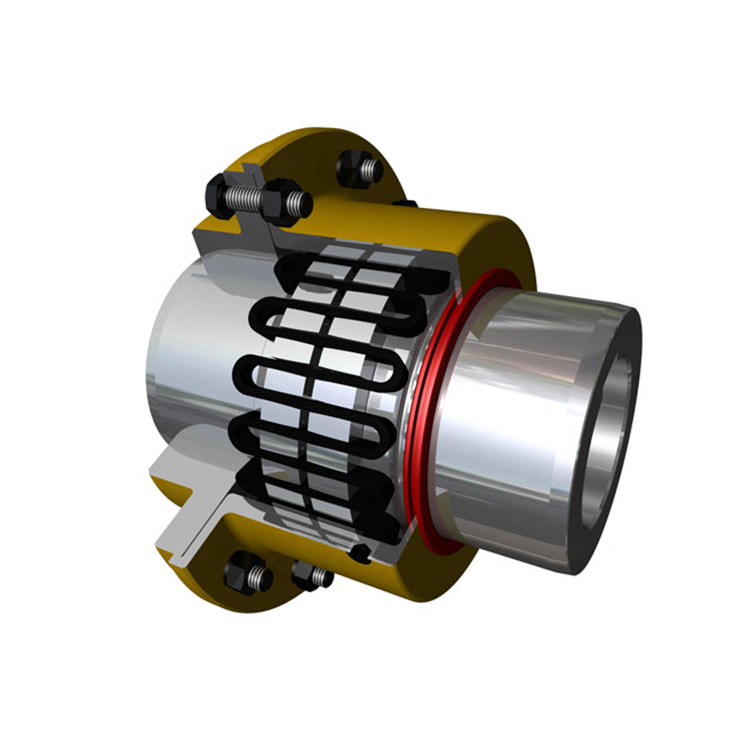
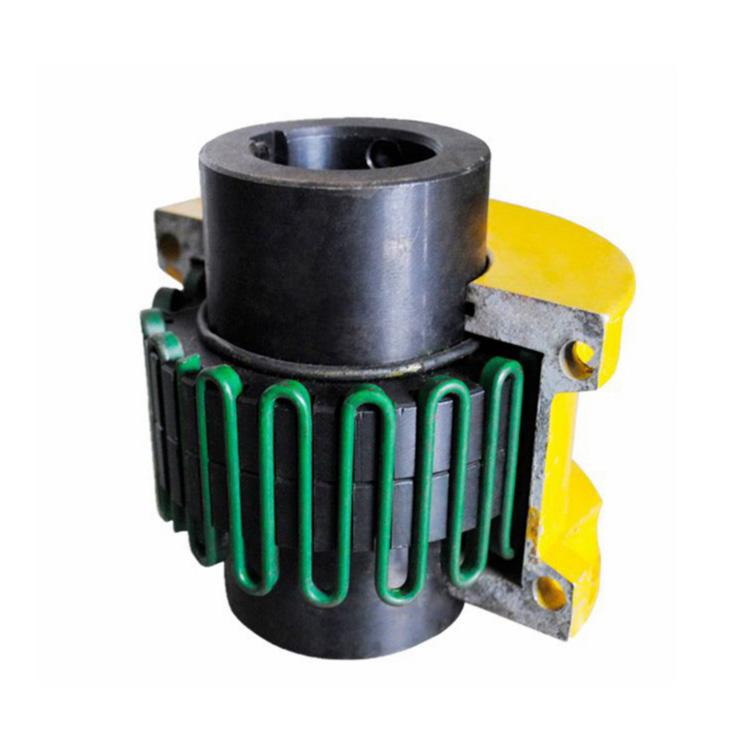
A flexible grid coupling is a mechanical device used to connect two rotating shafts while transmitting torque. It consists of two metal hubs connected by a serpentine-shaped spring steel grid. This grid fits into specially designed grooves in the hubs, allowing for flexibility and shock absorption.
Unlike rigid couplings, flexible grid couplings can accommodate slight misalignment and reduce the impact of vibration, making them ideal for dynamic industrial environments.
How Does It Work?
The working principle of a flexible grid coupling is based on the elastic deformation of the grid. When torque is transmitted:
·The grid flexes slightly within the hub grooves
·It absorbs shock loads and dampens vibration
·It distributes load evenly across the contact surface
This design helps protect connected equipment from sudden load changes and mechanical stress.
Key Advantages
1. Excellent Shock Absorption
Flexible grid couplings effectively reduce shock loads caused by sudden starts, stops, or load variations, helping to protect motors and gearboxes.
2. Vibration Dampening
The grid structure minimizes vibration, leading to smoother operation and reduced wear on connected components.
3. High Torque Capacity
These couplings are designed to handle high torque levels, making them suitable for heavy-duty industrial applications.
4. Easy Maintenance
The split cover design allows for easy inspection and replacement of the grid without moving connected equipment.
5. Misalignment Compensation
Flexible grid couplings can accommodate angular, parallel, and axial misalignment within certain limits.
Common Applications
Flexible grid couplings are widely used in industries where reliability and performance are critical, including:
·Pumps and compressors
·Conveyors and material handling systems
·Fans and blowers
·Mining and cement equipment
·Power generation systems
Their ability to operate under harsh conditions makes them a preferred choice in heavy industries.
Flexible Grid Coupling vs. Other Couplings
Compared to gear couplings and rigid couplings:
·Better vibration control than gear couplings
·More flexibility than rigid couplings
·Lower maintenance costs in many applications
This balance of performance and cost makes them a versatile solution for many industrial setups.
Installation and Maintenance Tips
To ensure optimal performance:
·Ensure proper alignment during installation
·Use recommended lubrication if required
·Regularly inspect the grid for wear or damage
·Replace worn components promptly
Proper maintenance significantly extends the service life of the coupling.
Conclusion
Flexible grid couplings offer a reliable, efficient, and cost-effective solution for industrial power transmission. Their ability to absorb shock, reduce vibration, and accommodate misalignment makes them ideal for a wide range of applications.
If you are looking to improve equipment performance and reduce maintenance costs, flexible grid couplings are a smart investment for your industrial system.
References
GB/T 7714:Rotor Dynamics. New Age International Publishers.
MLA:Coupling misalignment—quantification and effects.” Proceedings of the International Conference on Rotordynamics.
APA:Turbomachinery Rotordynamics: Phenomena, Modeling, and Analysis. Wiley