

In industrial power transmission, understanding the performance limits ofSteel Grid Couplings is crucial to ensure reliability and prevent costly downtime. This guide provides engineers and maintenance teams with essential specifications on torque ratings and speed limits to make informed decisions.
Principles of Steel Grid Coupling Design
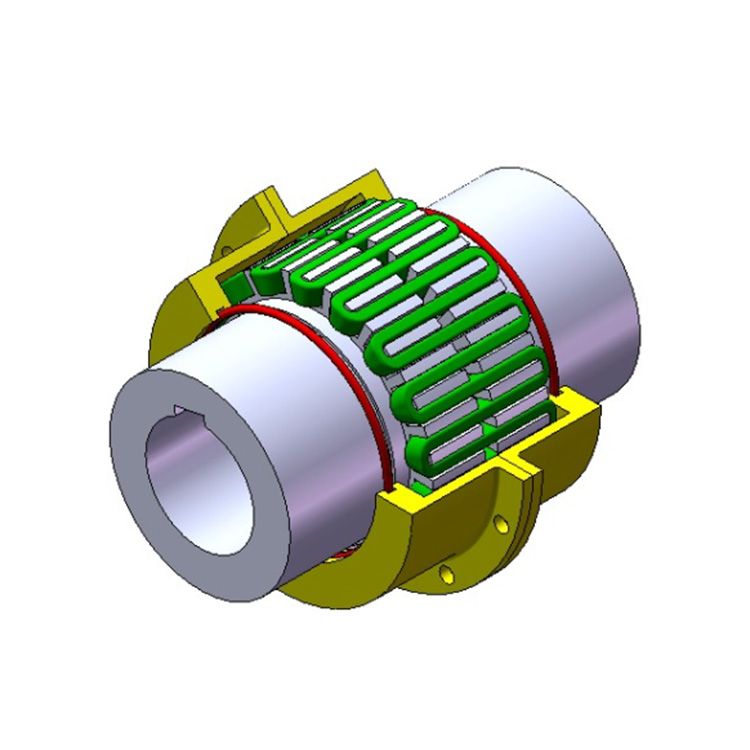
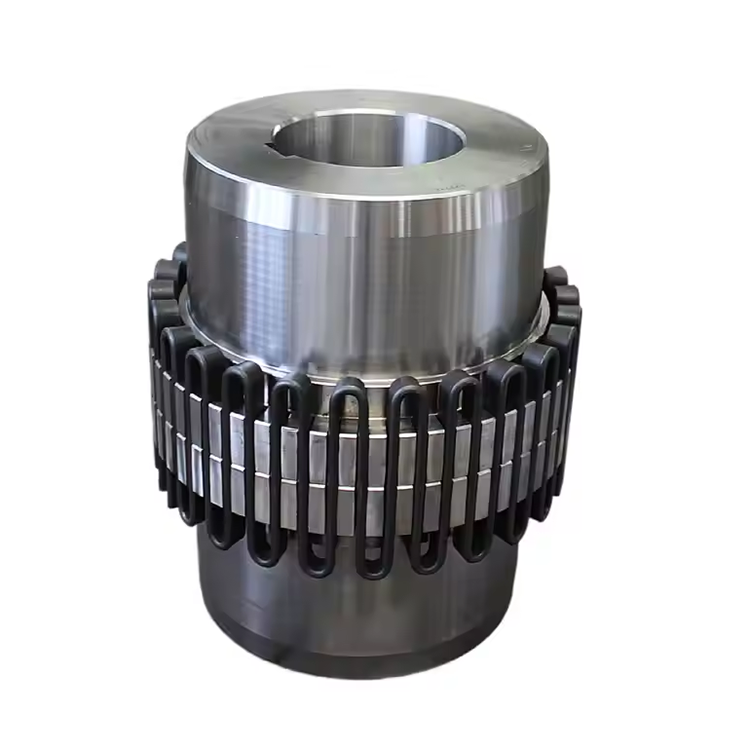
Steel Grid Couplings differ fundamentally from gear or elastomeric couplings. They feature a flexible steel grid connecting two hubs via a serpentine spring layout. This design allows the coupling to handle angular, parallel, and axial misalignments while maintaining torsional stiffness and transmitting high torque. The grid’s geometry provides progressive stiffness, meaning it becomes stiffer as the load increases—protecting connected equipment from shock loads and vibration.
Torque Ratings and Service Factors
The torque a Steel Grid Coupling can handle depends on grid size, material, and operating conditions. Small precision couplings may start at 100 lb-in, while heavy industrial units can exceed 10,000,000 lb-in. Engineers must consider service factors based on the driven equipment. Reciprocating engines, crushers, or compressors typically require factors between 2.0 and 3.0, whereas uniform loads like centrifugal pumps may use as low as 1.25. Peak torque often exceeds continuous ratings by 150–200%, ensuring adequate margin for start-up loads and temporary overloads.
Speed Limitations
Maximum operating speed varies by size and design. Small, precision-balanced couplings may exceed 10,000 RPM, while large industrial units are generally limited to 1,500–3,600 RPM. Speed limits are influenced by centrifugal forces on the grid and the need for dynamic balance. For high-speed applications above 3,600 RPM, precision-balanced units rated G6.3 or better are recommended. Operators should avoid running near natural frequencies to prevent resonance and premature failure.
Temperature Considerations
Operating temperature affects coupling performance. Standard ratings assume ambient conditions between -20°F and 250°F (-29°C to 121°C). Exceeding these limits requires derating. High temperatures reduce material strength and increase grid flexibility, lowering torque capacity by roughly 10–15% per 100°F over 250°F. Very low temperatures can increase brittleness in certain steels. Specialized materials such as alloy or stainless steels expand the operating range while maintaining performance.
Misalignment Tolerance
Steel Grid Couplings accommodate misalignment better than rigid designs, but excessive misalignment reduces torque and speed capacity. Typical limits are 0.5° angular misalignment and 0.010 in/in parallel offset. Beyond these thresholds, grid stress rises sharply, increasing fatigue risk and shortening service life. For unavoidable misalignment, larger couplings or spacer designs can provide flexibility without compromising ratings.
Installation and Maintenance Best Practices
Correct installation is key to achieving rated performance. Shaft alignment within 0.002 inches TIR optimizes torque and speed. Lubrication depends on design: some modern polymer grid couplings are maintenance-free, while traditional steel grids need periodic high-quality grease. Regular inspection for wear, corrosion, or cracking ensures safe operation and prevents unplanned downtime.
Industrial Applications and Selection Guidelines
Steel Grid Couplings are widely used in power generation, oil and gas, mining, and manufacturing. In power plants, they connect turbines to generators, accommodating load swings. In oil and gas, they are used on pumps and compressors where speed and misalignment tolerance are critical. Selecting the right coupling requires consulting manufacturer tables for duty cycles, environmental conditions, and industry regulations.
Choosing the Right Coupling
When selecting a Steel Grid Coupling, consider torque requirements, speed limits, misalignment, and operating environment. Calculate required torque including service factors, verify speed ratings with adequate margin below critical frequencies, and account for future expansion by specifying 20–30% extra capacity. Collaborating with experienced manufacturers ensures proper engineering support and custom solutions when standard models do not meet requirements.
References
GB/T 7714:Experimental and numerical analyses of grid couplings in quasi‑static and dynamic conditions. Mechanism and Machine Theory
MLA:Mechanical flexible couplings for torque transmission between two units. International Journal of Engineering Technology Research & Management
APA:Dynamic characteristics of gear coupling and rotor system in transmission process considering misalignment and tooth contact analysis. Processes.