

There is a persistent assumption in industrial procurement that coupling components are interchangeable between suppliers — that a T20 Grid Coupling from Supplier A performs the same function as an equivalent product from Supplier B, differing only in price and delivery time. This assumption is wrong, and the maintenance records of any plant with a history of premature coupling failures will confirm it.
The truth is that T20 Grid Coupling products vary significantly in their material specifications, heat treatment precision, dimensional tolerances, and quality assurance rigor — even when the products carry identical torque ratings and appear physically similar. A coupling that fails at 12,000 hours due to grid fatigue may do so not because it was undersized but because the grid steel was manufactured without proper hardenability control, resulting in a surface hardness of HRC 38 instead of the specified HRC 46. These differences are invisible in a catalog listing but produce dramatic differences in field performance.
This article provides a structured framework for evaluating a T20 Grid Coupling Supplier factory before you commit to a purchase. The goal is to identify which suppliers combine genuine manufacturing competence with reliable commercial standing — the combination that delivers consistent, long-term value rather than attractive initial pricing that masks hidden quality risk.
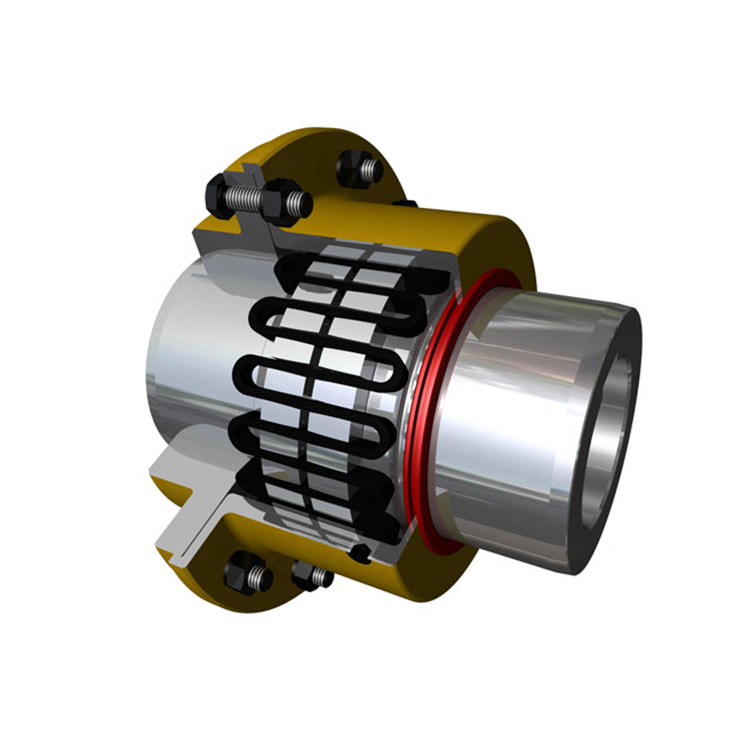
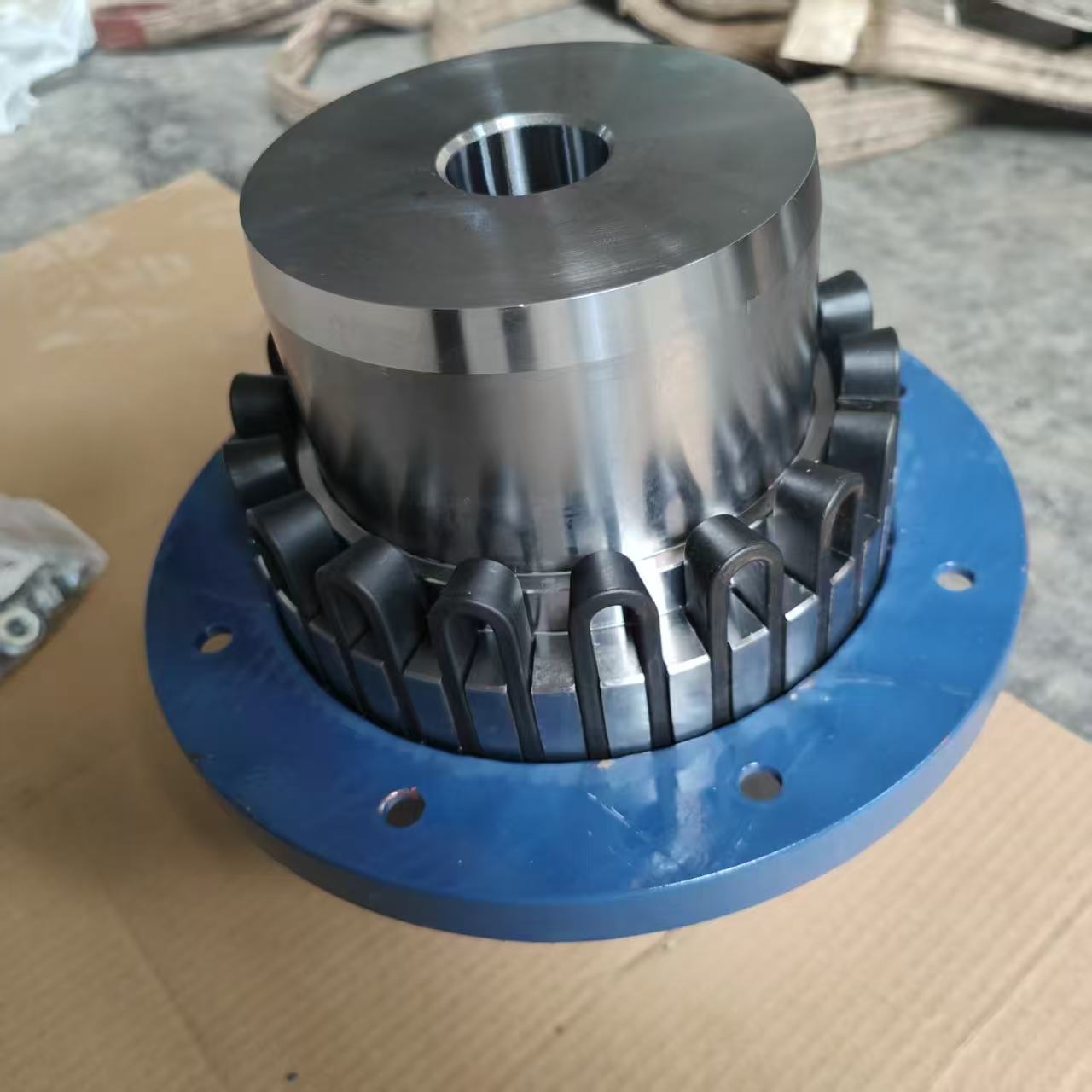
1. Manufacturing Capability Assessment
The first dimension of supplier evaluation examines whether the factory has the physical and technical capability to produce a T20 Grid Coupling that meets specifications consistently, at scale, over time.
Machine tool inventory reveals the factory's capacity and precision level. Look for CNC turning centers for hub production (indicating consistent bore and external diameter tolerances), gear hobbing or shaping machines for precision gear cutting if the supplier produces gear couplings alongside grid types, and coordinate measuring machines (CMM) for dimensional verification. A factory that cannot show you a CMM inspection report for a random sample from a recent production batch is a factory that is not systematically verifying its output quality.
Heat treatment capability is the most technically critical process in T20 Grid Coupling manufacturing. The grid element must achieve specific surface hardness (typically HRC 42–52) with controlled case depth and consistent core toughness. Suppliers that outsource heat treatment to a third-party facility are not automatically disqualified — many world-class heat treaters specialize in spring steel applications — but they must provide the heat treater's certification and have an incoming inspection protocol to verify heat treatment results on every batch of grid elements.
Production capacity should match your procurement volume realistically. A factory running at 90%+ capacity utilization may deliver excellent quality on small orders but struggle with your order when it conflicts with larger customers. A factory with spare capacity and systematic production planning is better positioned to honor delivery commitments consistently.
2. Quality Management System and Certifications
Certifications provide an external verification of a supplier's quality management practices. For T20 Grid Coupling procurement, the following certifications are meaningful and should be verified by requesting copies of current certificates.
ISO 9001:2015 is the baseline quality management standard. It verifies that the factory has documented procedures, internal audits, management review processes, and corrective action protocols. A supplier without ISO 9001 is making a business decision to operate without a recognized quality framework — a risk that should be weighed against any price advantage.
Industry-specific certifications add additional credibility for T20 Grid Coupling applications. For couplings used in mining equipment, look for endorsement of relevant Australian, South African, or North American mining equipment standards. For conveyor applications, evidence of Conveyor Equipment Manufacturers Association (CEMA) alignment indicates that the supplier's products have been evaluated against recognized industry performance criteria.
Material certifications are non-negotiable for serious coupling procurement. Every batch of steel used for grid elements and hubs should be accompanied by a mill test certificate (MTC) from the steel mill, verifying chemical composition, tensile strength, yield strength, and hardness. A T20 Grid Coupling Supplier that cannot produce MTCs for their raw materials is asking you to trust their product on faith rather than evidence.
3. Engineering and Technical Support Capability
The best T20 Grid Coupling Supplier relationships go beyond transactional product supply. Engineering and technical support capability is a key differentiator, particularly for applications with complex requirements or demanding operating conditions.
Application engineering support means the supplier can take your motor data, driven equipment specifications, and operating conditions and produce a technically justified coupling recommendation — not just match a torque figure to a catalog part number. A supplier who responds to your inquiry with questions about shaft sizes, operating speed, misalignment conditions, and environmental factors is demonstrating the engineering engagement you need.
CAD and 3D model availability for T20 Grid Coupling products enables your engineering team to verify fit-up and interference clearance in the design phase before physical samples arrive. Suppliers who provide parametric CAD models (in standard formats such as STEP or IGES) rather than static PDFs of dimension sheets are providing significantly more valuable technical support.
Failure analysis cooperation is an often-overlooked support dimension. When a coupling fails in the field, the root cause investigation benefits enormously from the supplier's willingness to examine the failed part, review operating conditions, and provide a written failure analysis report. Suppliers who view field failures as learning opportunities rather than embarrassing warranty claims are the partners worth keeping long-term.
4. Material Traceability and Lot Control
Traceability in coupling manufacturing means the ability to trace any finished T20 Grid Coupling back to the specific heat of steel from which its components were made, through each manufacturing operation, to the final inspection record. This is not merely a quality assurance nicety — it is the mechanism by which systematic quality problems are detected and corrected before they affect an entire production batch.
Effective traceability systems in T20 Grid Coupling production assign unique lot numbers to each batch of raw material, each machining operation, and each heat treatment cycle. These lot numbers are recorded on traveler documents that accompany the parts through the factory and are linked to the final product's serial number or batch code. When a coupling fails in service, the serial number allows the T20 Grid Coupling Supplier to reconstruct exactly which material lot, which machine, and which shift produced the part.
Buyers should ask to see a sample traceability record — a completed traveler document for a recently shipped T20 Grid Coupling — as part of the supplier evaluation process. The depth and completeness of this record tells you more about the factory's quality culture than any certificate on the wall.
5. Commercial Risk Assessment
Technical competence means nothing if the T20 Grid Coupling Supplier is not commercially viable to fulfill long-term commitments. Commercial risk assessment should cover financial stability, business continuity, and supply chain resilience.
Financial stability indicators include the supplier's business tenure, ownership structure, and export market track record. A supplier with 20+ years in coupling manufacturing, stable ownership, and a diverse customer base across multiple countries is more likely to honor long-term supply commitments than a new entrant with low pricing designed to build market share at unsustainable margins.
Business continuity planning addresses the risk of a supplier becoming unable to deliver due to production disruption. Ask about backup power capability, machine maintenance schedules, key personnel succession plans, and insurance coverage. A supplier who has thought through these scenarios — and can describe them — is managing commercial risk proactively.
Supply chain resilience for T20 Grid Coupling production depends on the supplier's relationships with raw material vendors. Single-source dependencies for critical materials (grid steel, heat treatment) create concentration risk. Suppliers who maintain dual-source relationships for key inputs are better positioned to absorb supply disruptions without affecting customer deliveries.
6. Sample Evaluation and First Article Inspection Protocol
Before committing to volume orders, the prudent procurement approach includes a sample evaluation and first article inspection protocol for a T20 Grid Coupling purchase.
Sample request process should include clear specifications: request two samples from regular production (not custom-built prototypes), accompanied by dimensional inspection reports, material test certificates, and any relevant performance test data. The cost of the samples is a legitimate investment in supply chain qualification.
First article inspection is a formal dimensional verification process in which your engineering team or a third-party inspection service verifies that the sample T20 Grid Coupling meets every dimension on the drawing within the specified tolerances. Any dimension found out of tolerance should be documented, reported to the supplier, and resolved — with corrected samples if necessary — before volume production proceeds.
Testing to destruction on a sample T20 Grid Coupling from a new supplier is the most definitive quality verification available. Torque-to-failure testing confirms that the coupling achieves the rated torque capacity without premature failure, and examination of the fracture surface provides direct evidence of material quality and heat treatment effectiveness. While this test destroys the sample, the information it provides — confirming that the coupling will not fail at 1.5× rated torque — justifies the cost for high-criticality applications.
Conclusion
Evaluating a T20 Grid Coupling Supplier factory is an investment in supply chain reliability that pays returns across the entire operating life of the equipment in which those couplings are installed. The framework described in this article — covering manufacturing capability, quality systems, engineering support, traceability, commercial risk, and first-article verification — provides a systematic, repeatable process for supplier qualification that any procurement or engineering team can implement.
The evaluation that matters most is not the paper review alone but the physical verification: the tour of the factory floor, the inspection of the CMM records, the examination of a traceability traveler, and the testing of a production sample to destruction. These activities reveal what the supplier is actually doing — not what their sales presentation claims. The operations that apply this rigorous approach to T20 Grid Coupling supplier qualification consistently build supply chains that perform, maintain, and scale without the surprises that characterize reactive procurement relationships.
Frequently Asked Questions (FAQ)
Q1: What is the minimum documentation a T20 Grid Coupling supplier should provide with each delivery?
Each delivery of T20 Grid Coupling products should include: a packing slip referencing the purchase order and item number, a certificate of conformance confirming the parts meet all drawing specifications, mill test certificates (MTCs) for the steel used in each major component (grid element, hub, flange), and heat treatment certificates if the supplier performs heat treatment in-house. Optional but highly valuable: a dimensional inspection report for critical dimensions, typically provided as a separate CMM printout or inspection sheet. Any supplier unwilling to provide MTCs and certificates of conformance should be treated as a significant commercial risk.
Q2: How can I verify a T20 Grid Coupling supplier's claimed torque ratings?
The most reliable verification is requesting a torque test report from the supplier's internal testing or a third-party testing laboratory. This report should document the torque applied to the sample, the method of torque application (hydraulic, mechanical), the measured torque at failure (or confirmation of successful completion at the rated torque without failure), and the failure mode if failure occurred. Comparing the supplier's published torque rating against their actual test-to-failure value reveals whether they publish conservative ratings (preferred — indicates engineering discipline) or optimistic ratings that leave no margin for variability.
Q3: What lead time should I expect from a qualified T20 Grid Coupling supplier?
Standard T20 Grid Coupling products from a supplier with adequate stock typically ship within 5–10 business days from order confirmation. Semi-standard products (non-stock bore sizes or non-standard materials) typically require 3–5 weeks. Fully custom products requiring new tooling may require 8–12 weeks. Suppliers who claim standard product availability but consistently miss these windows are managing their inventory poorly — a red flag for delivery reliability in critical applications. Ask for the supplier's on-time delivery rate over the past 12 months as part of the qualification process.
Q4: How should I evaluate a T20 Grid Coupling supplier's technical support for installation questions?
The quality of a T20 Grid Coupling Supplier's technical support can be evaluated by asking two questions during the qualification process: Can they provide written installation instructions with specific torque values for fasteners, alignment tolerances, and lubrication specifications? And do they offer application engineering consultation before purchase to help size the coupling correctly? A supplier who answers both questions positively — and follows through with documented procedures — is providing the level of support that prevents costly installation errors. A supplier who defers all technical questions to their product catalog is a transactional supplier who will not be helpful when problems arise in the field.
Q5: Should I evaluate only domestic T20 Grid Coupling suppliers or is international sourcing acceptable?
International sourcing for T20 Grid Coupling is entirely acceptable and often produces competitive cost advantages, particularly for high-volume standard products. The evaluation framework described in this article applies regardless of the supplier's geographic location. The key considerations for international sourcing are: freight and duty costs, which can erode cost advantages for standard sizes; lead time increases (typically 4–8 additional weeks for international shipments); and the practical challenge of conducting physical factory audits when the supplier is on another continent. Virtual factory audits via video conference are a practical compromise when on-site visits are not feasible. Prioritizing suppliers with established export experience and English-speaking technical support staff reduces the friction of international sourcing.
References:
American Society of Quality. (2018). Supplier Evaluation: A Systematic Approach. ASQ Quality Press.
Neale, M. J. (2019). The Maintenance Manager's Handbook. Elsevier.
Society of Automotive Engineers. (2020). SAE J500: Flexible Couplings — Nomenclature and Definitions. SAE International.
Mobley, R. K. (2014). Maintenance Engineering Handbook (8th ed.). McGraw-Hill Education.
International Organization for Standardization. (2015). ISO 9001:2015 Quality Management Systems — Requirements. ISO.